The Fascinating Psychology of New Year's Resolutions


Have you been inundated with content about New Year’s resolutions yet? It probably started back in December, with creators trying to convince you that they have the perfect way for you to achieve your goals this year. Some planner, framework, course, etc. that will finally enable you to follow through.
I’m NOT claiming to have that information for you, but what I DO have is a look at the psychology behind this annual phenomenon. Here are some of the psychological reasons behind why people make (and often fail to keep) New Year's resolutions.
1. The Fresh Start Effect
The beginning of a new year symbolizes a new beginning, offering a psychological fresh start. This effect can be a powerful motivator for change and self-improvement. I’m a sucker for it every year, including this one, with this very Substack publication.
I feel that effect, personally, despite being completely aware that it’s an arbitrary starting point that happens to coincide with our calendar year.
According to the journal article “The Fresh Start Effect: Temporal Landmarks Motivate Aspirational Behavior“ temporal landmarks:
- segregate life into numerous, distinct mental accounting periods
- relegate past imperfections to a previous mental accounting period
- promote a focus on the big picture
However, as the year progresses, this sense of newness fades, and so does the motivation it provided. I’ve experienced this juuuuuuust about every year, honestly. Understanding and anticipating this diminishing motivation can help you plan for long-term commitment rather than relying solely on the initial boost of a new year.
2. Goal-Setting and Self-Identity
When setting resolutions, there's often a gap between your current self and the ideal you aspire to. Marketers love to capitalize on this in the biggest niches (health, wealth, relationships, etc). But this discrepancy often leads to setting goals that are more about wishful thinking than reflecting your true personal values or current realities.
You’ve likely experienced it yourself, that when resolutions aren't deeply rooted in your authentic self or realistic capabilities, they become harder to maintain. Aligning resolutions more closely with your true identity (if you even know what that is….I’m not sure I do) and capabilities can increase the chances of success.
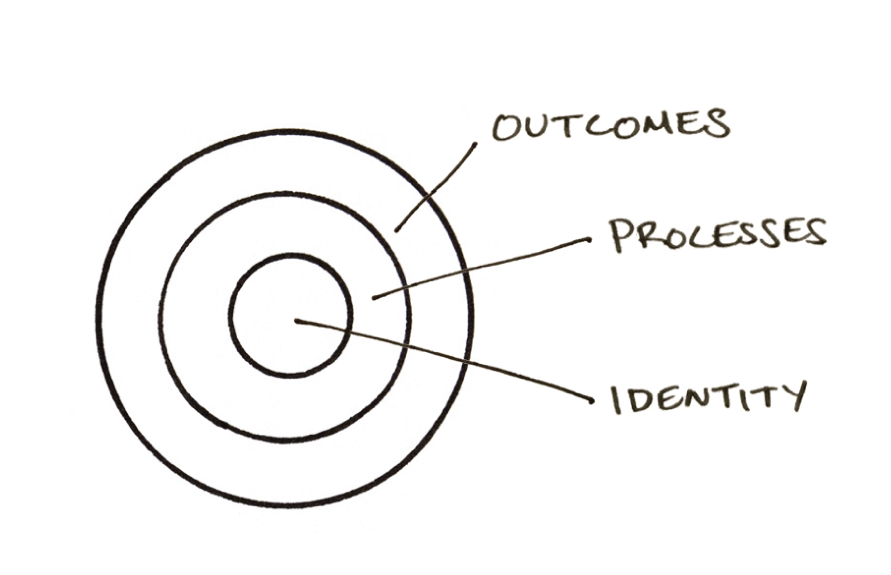
But, what if your current identity isn’t what will get results? According to James Clear, author of the oh-so-popular book ‘Atomic Habits’:
The key to building lasting habits is focusing on creating a new identity first. Your current behaviors are simply a reflection of your current identity. What you do now is a mirror image of the type of person you believe that you are (either consciously or subconsciously).
To change your behavior for good, you need to start believing new things about yourself. You need to build identity-based habits.
Easier said than done, though, because Clear says this is the deepest layer at which change can occur. Better get digging!
3. Self-Control and Willpower
Resolutions typically require a change in behaviour, demanding significant self-control and willpower. Research suggests that willpower is like a muscle that gets tired with overuse. Continuously resisting temptations can deplete one's willpower, making it more challenging to stick to resolutions.
Structuring environments to minimize reliance on willpower—for instance, removing temptations—can be an effective strategy. When there’s literally no chocolate in my house, there’s a huge hurdle I have to surmount. And chances are slim that I’m going to drive to the store just to get my fix.
According to one Vox article, self-control and willpower are overrated. Are these ideas just one of the many things that pop psychology has foisted upon us? It’s hard to tell anymore, what’s real and what’s a load of hullabaloo.
4. Fear of Failure and Perfectionism
It’s common to become a little paralyzed by the fear of not achieving resolutions. This fear is often linked to a perfectionist mindset, where anything short of complete success is seen as a failure. This all-or-nothing thinking can lead you (and millions of others) to give up entirely after a minor setback.
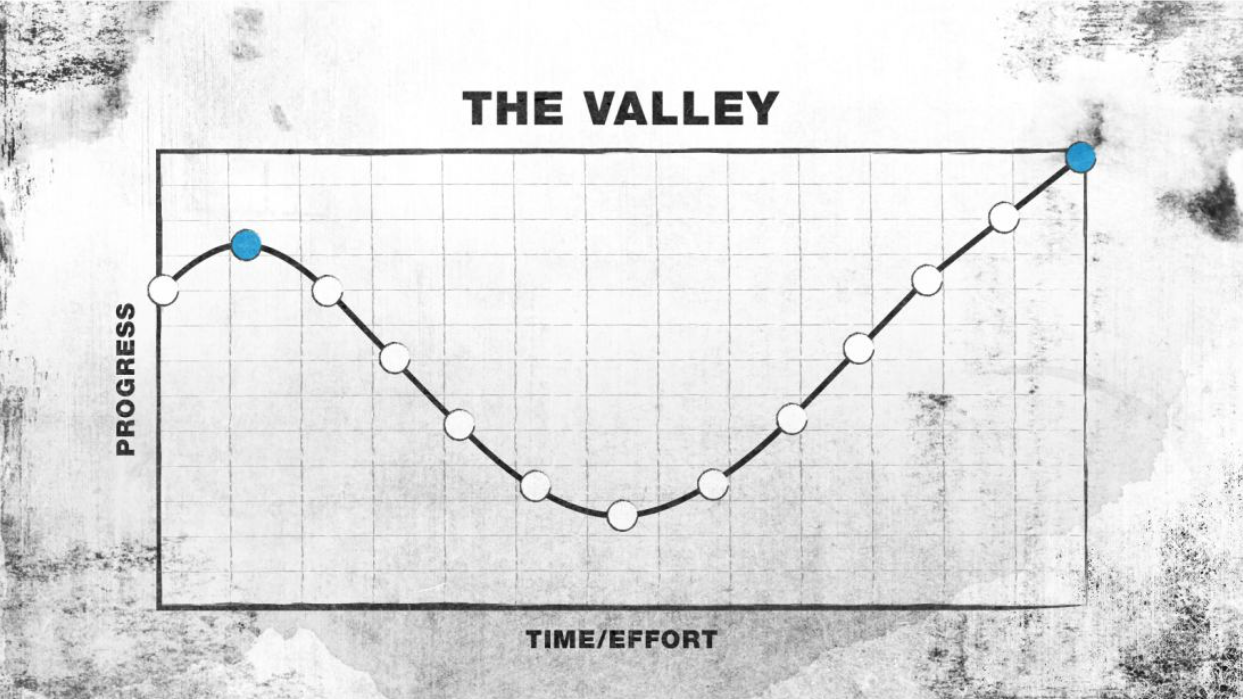
In his book "Change Your Brain, Change Your Life," psychiatrist Daniel G. Amen emphasizes that conquering adversity isn't a straightforward journey. According to him, "no one gets better in a straight line." It's more like a rollercoaster ride with its share of highs and lows.
Here's the thing: you need both those peaks and valleys to make progress. The highs keep your goals in sight, while the lows motivate you to push forward and reach them.
As someone with ADHD, this one hits especially close to home. As the online magazine ADDitude explains:
Rejection sensitive dysphoria (RSD) is an intense emotional response caused by the perception that you have disappointed others in your life and that, because of that disappointment, they have withdrawn their love, approval, or respect. The same painful reaction can occur when you fail or fall short of your rather high goals and expectations.
That last part is what affects me (and millions of others who have ADHD) the most. I set such high expectations and create such lofty goals that I convince myself I’m doomed before I even begin.
Example: I’ve wanted to write on Substack for a while now, but I kept coming up with new ideas, going down a rabbit hole, then talking myself out of it.
Embracing a more forgiving and flexible approach, where setbacks are seen as natural parts of the journey, can help maintain progress. And that’s what I’ll be doing with this new project of mine, Humanhood :)
5. Delayed Gratification
Many resolutions involve postponing immediate gratification for long-term benefits, which is challenging for many (including myself, and likely you). The psychological struggle between choosing immediate pleasure (eating a delicious dessert) versus a future benefit (weight loss) can derail resolutions.
Training yourself to appreciate and value the benefits of delayed gratification can be crucial for sticking to resolutions. Easier said than done, though.
You may have heard of something called the “marshmallow test”.
In 1972, Walter Mischel, PhD and his team offered a preschooler a plate of treats, like marshmallows. They told the child that the researcher would briefly leave the room, and the child had a choice: waiting meant getting two marshmallows, or ringing a bell for an immediate return but only one marshmallow.
The immediate results weren’t the most interesting part. James Clears (remember him?) lays it out in his post about delayed gratification:
The children who were willing to delay gratification and waited to receive the second marshmallow ended up having higher SAT scores, lower levels of substance abuse, lower likelihood of obesity, better responses to stress, better social skills as reported by their parents, and generally better scores in a range of other life measures. (You can see the followup studies here, here, and here.)
The researchers followed each child for more than 40 years and over and over again, the group who waited patiently for the second marshmallow succeed in whatever capacity they were measuring. In other words, this series of experiments proved that the ability to delay gratification was critical for success in life.
Pretty sweet, huh? Sorry, that low-hanging fruit was just sitting there, ripe for the picking. I’ll do better.
6. Social Influence and Group Behaviour
Your buddies and the situations you find yourself in can have a big say in how you behave and make choices, even when it comes to New Year's resolutions.
Having your friends’ support can be awesome, but if you're only making resolutions because everyone else is doing it or because it's what's "expected," you might not be fully into it.
The key? Make sure your resolutions really mean something to you personally, not just because it's what's trending or your pals are doing it. When it's close to your heart, you're more likely to stick with it.
Here are some ways that social influence and group behaviour can impact your New Year’s resolutions:
- Friends and Influence: Your friends and family can either boost or bog down your resolutions. Supportive ones can be your cheerleaders, while negative influences can make it tough to stick to your goals.
- Team Up: Joining a group with similar resolutions, like a workout gang or a support crew, can keep you on your toes. You've got people to keep you accountable, and that can make all the difference.
- High Fives: Achieving your resolutions might earn you kudos and pats on the back from your social crew. Those good vibes can keep you motivated.
- Keeping Up: Watching how others are doing can be a real eye-opener. Someone else's success can inspire you, but don't let it get you down. Use it as fuel for your own journey.
- Group Rules: Every crew's got its own rules and expectations. If your resolutions line up with what yours is into, it'll be a smoother ride. Because it’s all about the vibe, or whatever the kids these days say 😂
Bottom line: Your social scene can either give you a leg up or drag you down. Keep your friends in the loop and use their support to help you rock those resolutions.
7. Habit Formation
Most resolutions come down to creating new habits or ditching the old ones. But here's the deal: building habits is a slow and steady journey that takes some serious dedication.
A lot of us (count me in too!) tend to underestimate how much time and consistency it takes to make those habits stick. That's when we start feeling bummed and give up on our goals too soon.
Here's the trick: if you learn how habits work and use some smart strategies, you'll have a better shot at success.
I won’t wax poetic on this topic because there are countless resources out there that you can refer to. I’ll list a few. Where possible, I’m linking to the books’ websites and not Amazon…buy it wherever you want (or heck use the Libby app to read/listen for free).
- Switch: How to Change Things When Change Is Hard
- Tiny Habits: The Small Changes That Change Everything
- Making Habits, Breaking Habits
- Atomic Habits
- Good Habits, Bad Habits: The Science of Making Positive Changes That Stick
8. Cognitive Dissonance
Sometimes, there's a bit of a clash between what we believe and how we actually act. Take, for instance, someone who's all about healthy living but can't seem to kick the smoking habit. That inner conflict can mess with our heads and make us want to chuck our resolutions out the window, especially when changing seems like a big mountain to climb.
You can ease that conflict by taking it step by step. Start with small, doable changes that align better with what you believe in. It's a more manageable way to make those resolutions stick.
In essence, cognitive dissonance reminds us that our resolutions need to be in harmony with our beliefs and values to increase the likelihood of success. Recognizing and addressing this dissonance can be a key factor in sticking to your New Year's resolutions.
Know someone who would enjoy this? Please consider sharing!
That’s a Wrap
Well, I’ve got my first real post under my belt. Might be a little scattered, but it’s published. Done is better than none (did I just make that up?). I’m already looking forward to my next one. Until then, remember…
You can’t spell humanity without u-n-i-t-y.